Listen to this article
How the Internet Actually Works (Explained Simply)
The internet is something most of us use every day. We search on Google, watch videos, send emails, and browse websites without thinking much about what is happening behind the scenes. But have you ever wondered how the internet actually works?
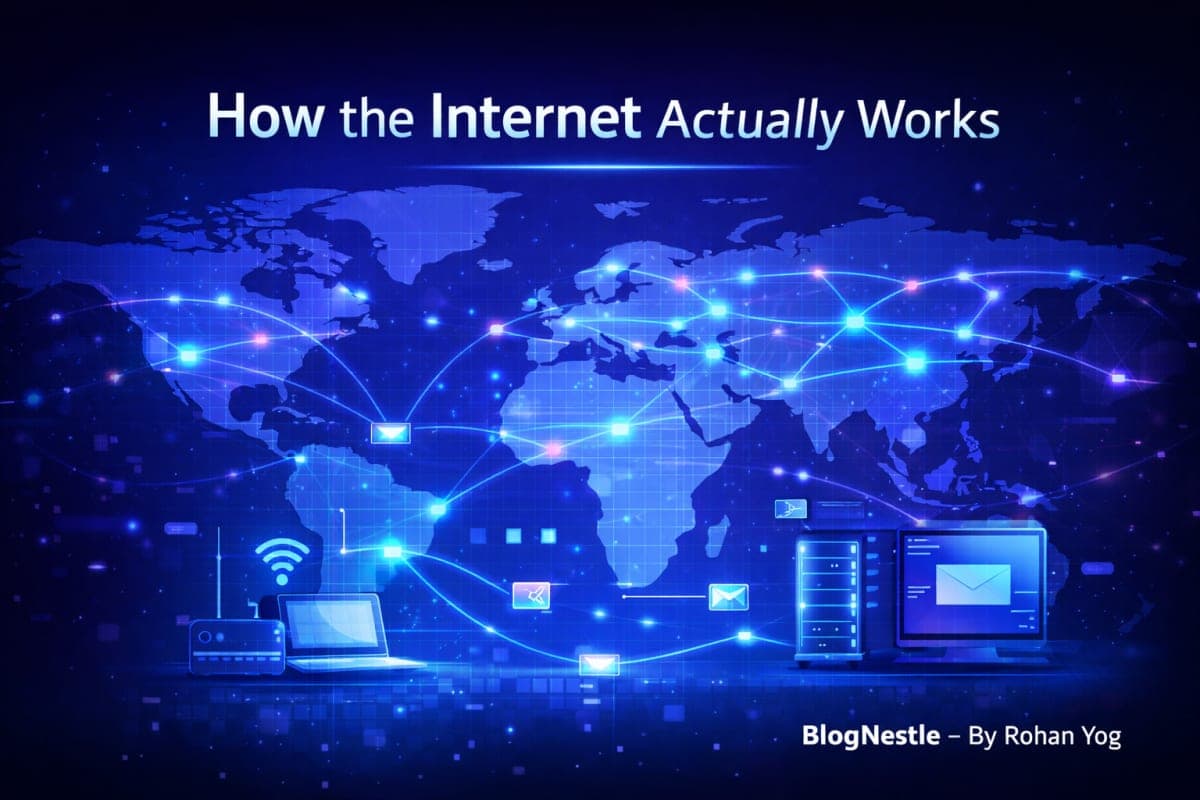
In simple terms, the internet is a global network that connects millions of computers and devices so they can communicate and share information. When you open a website, send a message, or watch a video, a complex system works in the background to deliver that content to your screen in seconds.
In this article, we will break down how the internet works in a simple and easy-to-understand way.
What Is the Internet?
The internet is a global network of connected computers and servers that communicate with each other using standard protocols.
Instead of being a single system, the internet is made up of many smaller networks connected together. These networks are operated by companies, universities, governments, and individuals.
When these networks connect, they form what we call the Internet.
How Devices Connect to the Internet
To access the internet, a device must connect to an Internet Service Provider (ISP).
An ISP is a company that provides internet access. Examples include broadband, fiber, or mobile internet providers.
When you connect to the internet through your home Wi-Fi or mobile data, your device sends requests through your ISP to reach websites and online services.
What Happens When You Open a Website
When you type a website address into your browser, several steps happen in milliseconds.
Step 1: DNS Lookup
The browser first contacts a DNS (Domain Name System) server.
DNS works like a phonebook for the internet. It translates a website name into an IP address.
Example:
google.com → 142.250.xxx.xxx
Step 2: Request Sent to a Server
Once the IP address is found, your browser sends a request to the server where the website is hosted.
A server is simply a powerful computer that stores website files.
Step 3: Server Sends Data Back
The server sends website files back to your browser. These files may include:
- HTML (structure of the page)
- CSS (design and layout)
- JavaScript (interactive features)
- images and videos
Step 4: Browser Displays the Website
Your browser reads these files and displays the website you see on your screen.
All of this usually happens in less than a second.
What Is an IP Address?
Every device connected to the internet has an IP address.
An IP address works like a unique identifier that allows devices to find each other on the network.
For example:
192.168.1.1
This address tells the network where information should be sent.
How Data Travels Across the Internet
Information on the internet is sent in small pieces called data packets.
Each packet contains:
- part of the data
- the sender's address
- the destination address
These packets travel through multiple networks and routers until they reach the correct destination.
Once all packets arrive, they are reassembled into the original information.
What Are Protocols?
Communication on the internet works through rules called protocols.
Two important protocols include:
HTTP / HTTPS
Used to transfer web pages between browsers and servers.
TCP/IP
Ensures data packets are delivered correctly across networks.
These protocols allow devices from different manufacturers and networks to communicate smoothly.
Why the Internet Is So Fast
The internet is able to deliver data quickly because of advanced infrastructure such as:
- fiber optic cables
- high-speed routers
- global data centers
Many large technology companies operate massive server networks to deliver content quickly around the world.
Why Understanding the Internet Matters
Understanding how the internet works can help you:
- become more tech-savvy
- troubleshoot connection issues
- understand web development
- learn networking fundamentals
Even basic knowledge of the internet helps people better understand the technology they rely on daily.
Final Thoughts
The internet may seem complex, but at its core it is simply a system that allows computers and devices to communicate with each other across the world.
Every time you visit a website or send a message online, a powerful network of servers, routers, and protocols works together to deliver information instantly.
By understanding how the internet works, you gain a deeper appreciation for one of the most important technologies shaping our modern world.
Author: Rohan Yog
Website: PageAtlas

Rohan Yog
Experienced writer and tech enthusiast. Follow for more insightful articles on technology, programming, and web development.
View all articles by Rohan Yog→